

Dubai’s Population Surges to 4.58 Million, Highlighting the Emirate’s Rapid Growth
Dubai continues to strengthen its position as one of the world’s fastest-growing global cities, with its population reaching approximately 4.58 million by the end of 2025. The latest figures released by Digital Dubai show that the emirate added around 332,000 residents in a single year, representing a significant 7.5 per cent annual increase. The figures underline the continued attractiveness of Dubai as a destination for workers, investors, entrepreneurs, families and international businesses.
The population increase is particularly significant because Dubai’s growth is closely connected with its expanding economy and international role. The emirate has continued to attract people from different parts of the world because of its business-friendly environment, infrastructure, employment opportunities, tourism industry and real-estate market. Dubai has also positioned itself as a major international centre for finance, trade, technology, aviation and tourism, creating demand for both skilled professionals and workers across a wide range of sectors.
According to the newly introduced “Dubai Population Now” initiative, the government is moving away from relying only on traditional population-counting methods. The new system uses administrative records, smart government systems, digital technologies and artificial intelligence to monitor population changes more continuously. This allows authorities to understand demographic trends more quickly and use updated information when planning infrastructure and public services.
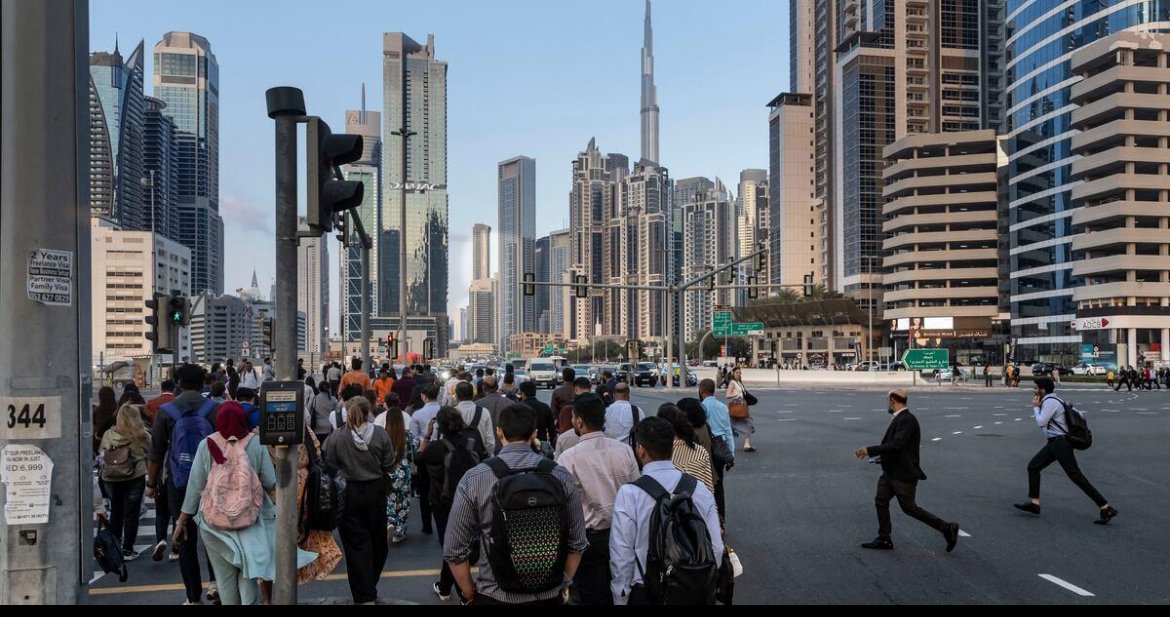
One of the most striking aspects of Dubai’s population story is the difference between its resident population and the number of people physically present in the emirate during the day. While the resident population was around 4.58 million, the average daytime population reached approximately 6.392 million when commuters, tourists, students, shoppers and other temporary visitors are included. This means that Dubai has to provide services and infrastructure for a much larger daily population than its resident figure alone suggests.
The daytime population figure demonstrates the enormous role Dubai plays as a regional business and tourism hub. Thousands of people enter the emirate every day for work, meetings, shopping, tourism, education and other activities. The difference of more than 1.8 million people between the resident and daytime populations puts additional pressure on roads, public transportation, airports, healthcare facilities, utilities, hospitality businesses and other public services. At the same time, it also demonstrates the scale of economic activity taking place across Dubai.
The rapid increase in population is also important for Dubai’s real-estate sector. More residents require homes, offices, retail spaces and community facilities. Population growth can therefore increase demand for apartments, villas and rental properties, particularly in areas with good access to major roads, metro stations, schools and business districts. Developers and investors can use population data to understand where future demand may emerge and how residential communities need to expand.
Transportation is another major area affected by population growth. With millions of residents and visitors travelling across the emirate every day, Dubai needs to continuously expand and improve its road and public-transport network. The government has already announced major infrastructure projects designed to support future growth. In July, Dubai authorities approved a series of landmark projects worth AED 18 billion, including major transport and infrastructure developments intended to improve connectivity and accommodate the emirate’s growing population.
The new population-monitoring system could make future planning more precise. Instead of waiting for periodic population surveys, authorities can use continuously updated data to identify demographic changes and respond more quickly. This can help with decisions related to housing, education, healthcare, transportation and other essential services. Digital Dubai described the initiative as part of the emirate’s wider ambition to become a global model for data-driven and AI-powered government.
Dubai’s population growth also reflects its appeal to international residents. The city has a highly diverse population, with people from numerous countries living and working in the emirate. This international character is visible across Dubai’s residential communities, workplaces, restaurants, shopping centres and tourism destinations. The continued arrival of residents supports a broad consumer economy, from retail and hospitality to professional services, construction, real estate and technology.
The growth is also relevant for Dubai’s labour market. A larger population means a larger pool of workers and consumers, which can support the expansion of businesses. Companies operating in sectors such as hospitality, construction, retail, logistics, technology, finance and professional services may benefit from the continued expansion of the city. For job seekers, population growth can also indicate increasing demand for services and employment, although competition for desirable positions can remain strong.
Dubai’s ability to attract people despite regional uncertainty is another important aspect of the figures. Data reported in July showed that the population had continued to rise during 2026, with the Dubai Population Clock recording more than 4.74 million residents by July 30. This suggested that the emirate’s demographic momentum had continued beyond the 4.58 million figure recorded at the end of 2025.
Overall, Dubai’s population growth is more than simply a demographic statistic. It reflects the emirate’s continuing economic expansion, international connectivity and attractiveness as a place to live, work, invest and visit. A population of 4.58 million at the end of 2025, combined with a daytime population exceeding 6.3 million, demonstrates the enormous scale of activity taking place in Dubai every day.
As Dubai continues to grow, accurate population data will become increasingly important. The government’s new real-time monitoring system is designed to provide a clearer picture of how many people live in the emirate, how the population changes and how many people enter Dubai each day. With this information, authorities can better prepare for future demand and plan infrastructure, housing, transportation and public services accordingly.
For Dubai, the message from the latest population figures is clear: the emirate continues to grow at a remarkable pace, and its future development will increasingly depend on its ability to manage that growth efficiently and sustainably.