

AI & Technology — Dubai Launches Driverless Robotaxis
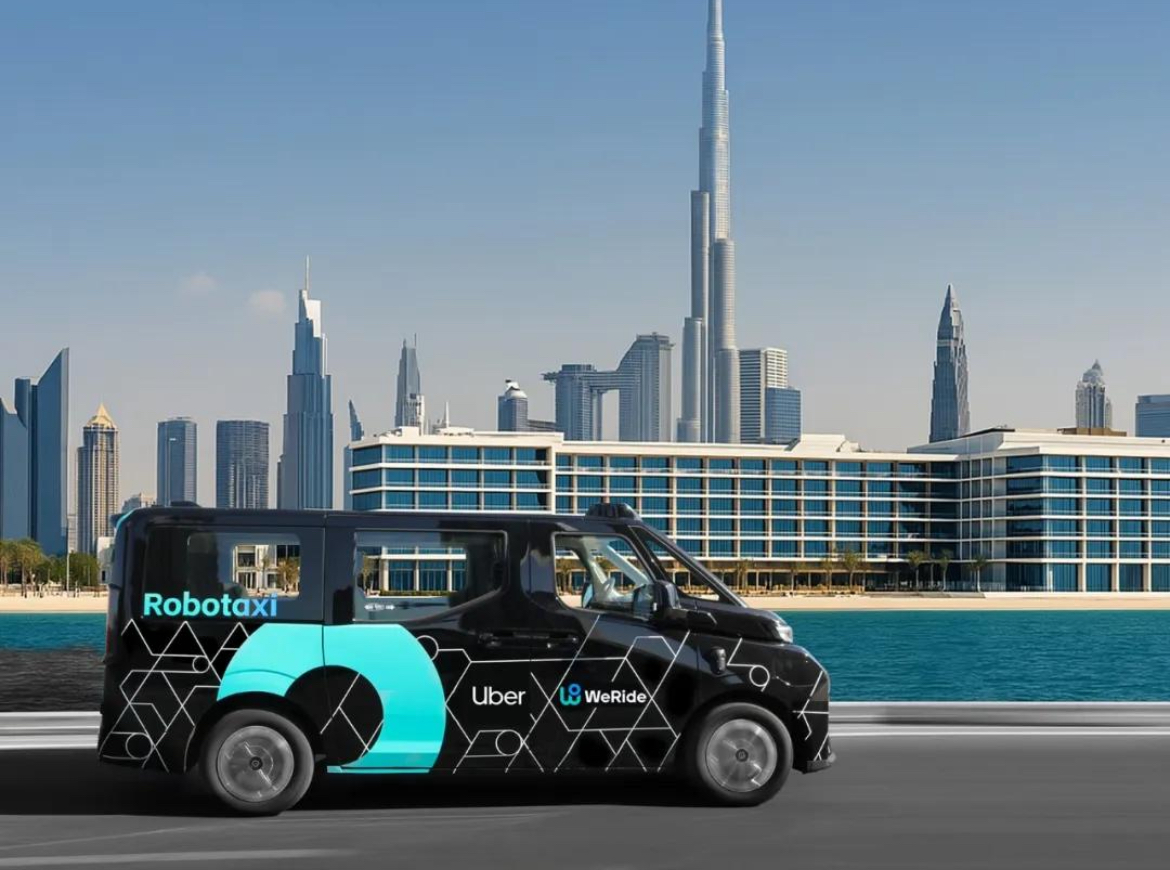
Dubai has once again captured global attention by officially launching fully driverless robotaxi services, marking a major milestone in the city’s ambitious transformation into one of the world’s smartest urban centers. The new autonomous taxi program, introduced through a collaboration between Uber, WeRide, and the Roads and Transport Authority (RTA), represents far more than just a transportation upgrade. Analysts say it signals the beginning of a new technological era for the Middle East, where artificial intelligence is no longer limited to apps and software but is now physically operating on public roads in everyday life.
The autonomous taxis have initially been deployed in selected districts including Jumeirah, Umm Suqeim, and parts of central Dubai. Residents can access the service directly through the Uber application by selecting the autonomous ride option. Once booked, the vehicle arrives without a human driver, relying entirely on advanced AI systems, sensors, cameras, radar technology, and real-time mapping software to navigate through city streets safely.
For many residents and tourists, the sight of a car moving through Dubai roads without anyone behind the steering wheel feels like something taken straight from a science-fiction film. Yet city officials insist this is only the beginning. Dubai has repeatedly positioned itself as a global testing ground for future technologies, and autonomous transportation is one of the central pillars of its long-term urban development strategy.
According to RTA officials, the robotaxi initiative supports Dubai’s larger goal of making 25 percent of all transportation autonomous by the year 2030. Authorities believe this transformation could dramatically reduce traffic accidents caused by human error, improve traffic efficiency, lower transportation costs, and reduce environmental pollution. Studies conducted by transportation experts worldwide consistently show that human mistakes are responsible for the overwhelming majority of road accidents. By removing fatigue, distraction, emotional driving, and reckless behavior from the equation, autonomous systems are expected to create safer roads over time.
The technology inside these vehicles is extremely sophisticated. Each robotaxi uses a combination of LiDAR sensors, high-resolution cameras, artificial intelligence decision-making software, and GPS systems to understand its surroundings in real time. The AI constantly scans nearby vehicles, pedestrians, traffic lights, road signs, lane markings, and even sudden movements that may occur unexpectedly. The system processes enormous amounts of data every second, allowing the car to make split-second driving decisions without human intervention.
Dubai’s roads present a particularly interesting testing environment for autonomous vehicles because of the city’s unique combination of high-speed highways, luxury traffic, aggressive lane-changing behavior, and dense tourist areas. Successfully operating driverless vehicles in such conditions could strengthen Dubai’s position as one of the leading cities for AI transportation innovation globally.
The UAE government has been investing heavily in artificial intelligence across multiple industries during the past decade. Beyond transportation, AI is increasingly being integrated into healthcare systems, policing, government services, airport security, logistics, and tourism management. Dubai’s leadership has repeatedly emphasized that the future economy of the UAE will rely heavily on technology, automation, robotics, and digital infrastructure rather than traditional oil revenues.
Technology experts believe the robotaxi program may eventually reshape the economic structure of urban transportation itself. If autonomous fleets become widespread, the cost of ride-hailing services could decrease substantially because companies would no longer need to pay human drivers. This could lead to cheaper transportation for residents while also reducing the number of privately owned vehicles on roads. Some analysts predict future cities may gradually move away from individual car ownership altogether, with residents relying instead on fleets of AI-powered vehicles available on demand.
However, the development has also triggered debate regarding employment and regulation. Thousands of people in Dubai and across the Gulf region currently work as taxi drivers, chauffeurs, and ride-hailing operators. As autonomous systems become more advanced, concerns are growing about how automation could affect traditional driving jobs in the future. Economists argue that while AI may eliminate certain categories of work, it could also create entirely new industries involving robotics maintenance, AI monitoring, cybersecurity, and smart infrastructure management.
Cybersecurity remains another major area of focus. Since autonomous vehicles rely heavily on software and internet-connected systems, experts stress the importance of protecting these networks from hacking attempts or technical failures. Authorities in Dubai have stated that the vehicles undergo strict testing procedures and are monitored continuously to ensure passenger safety.
Public reaction to the launch has been mixed but largely enthusiastic. Many younger residents and technology enthusiasts have expressed excitement about experiencing futuristic transportation firsthand. Videos of driverless taxis navigating Dubai roads have already gone viral across social media platforms, further reinforcing the city’s reputation as a symbol of innovation and futuristic urban living.
Tourism experts also believe the robotaxi program could become a major attraction for international visitors. Dubai has long marketed itself as a destination where people can experience the future before it reaches other parts of the world. From the world’s tallest building to AI-powered government services and futuristic architecture, the city consistently positions itself at the forefront of technological experimentation. Autonomous transportation fits perfectly into that image.
Environmental experts say autonomous systems may also help improve fuel efficiency and reduce emissions. AI-powered driving tends to be smoother and more optimized than human driving, reducing unnecessary braking, acceleration, and traffic congestion. Over time, if combined with electric vehicle technology, autonomous fleets could contribute significantly to Dubai’s sustainability goals and carbon reduction strategies.
The partnership between Uber and WeRide is also strategically important for the global autonomous vehicle industry. Many countries still maintain strict regulations around fully self-driving vehicles due to safety concerns and legal complications. Dubai’s willingness to embrace large-scale testing creates valuable real-world data that could influence how autonomous systems are adopted internationally in the coming years.
Industry analysts predict that if the current rollout proves successful, the service will likely expand into key areas including Downtown Dubai, Dubai Marina, Business Bay, and major airport routes. Future versions of the technology may also integrate multilingual AI assistants, personalized ride experiences, smart tourism guides, and fully cashless AI-managed transportation ecosystems.
For now, Dubai’s robotaxi launch represents more than simply a new way to travel. It symbolizes the city’s broader ambition to become a living laboratory for the technologies that may define urban life in the decades ahead. While many cities around the world continue debating the future of autonomous systems, Dubai is actively placing that future onto its streets today.