


UAE Introduces Strict New Salary Rule for Private Companies from June 2026
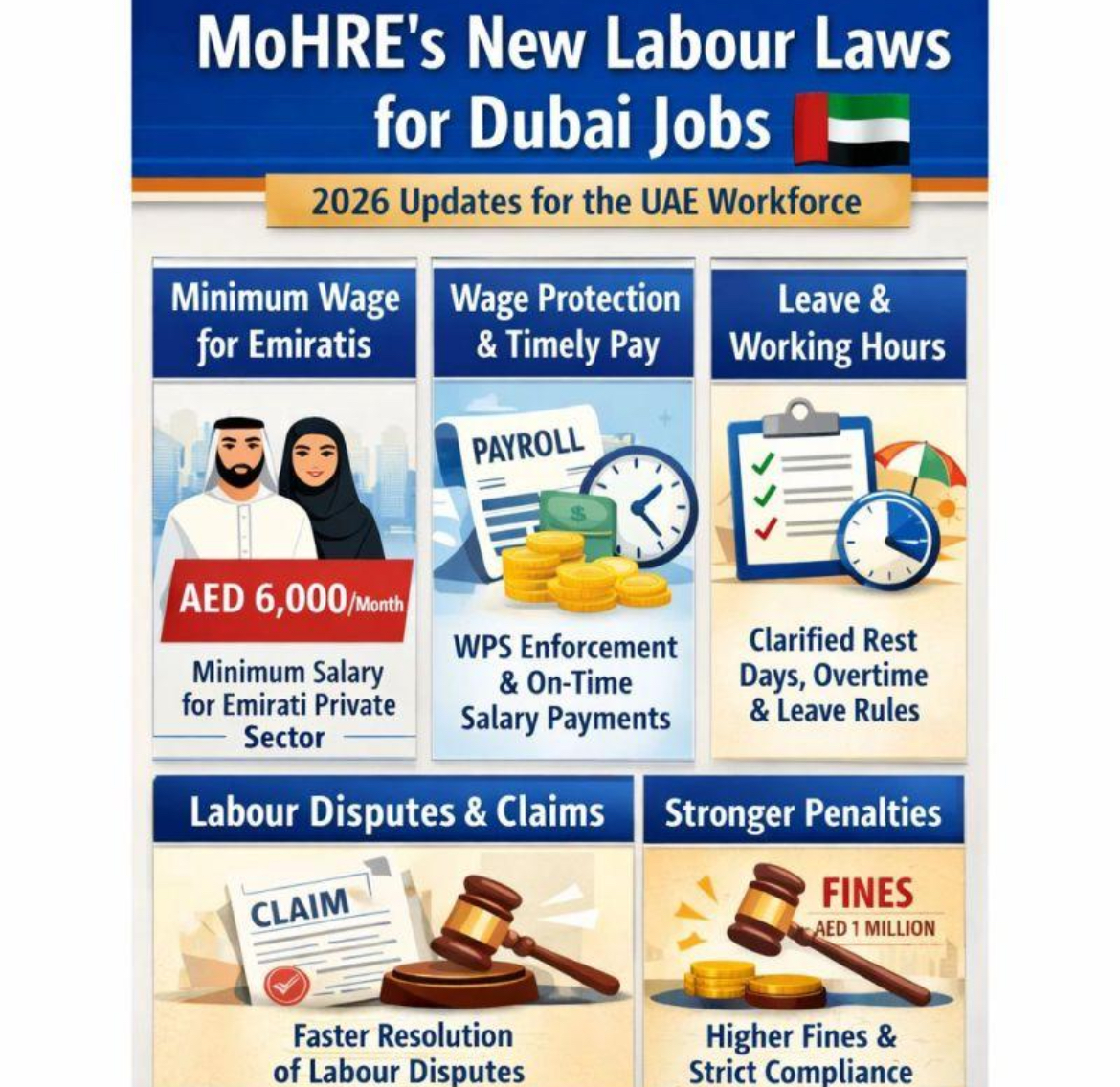
The United Arab Emirates has announced a major new labour regulation that will significantly affect private companies across Dubai and the rest of the country. Starting from June 1, 2026, all private sector employers in the UAE will be required to pay employee salaries on the first day of every month. Companies that fail to comply with the rule may face legal penalties, restrictions, and financial fines.
The announcement was made by the UAE Ministry of Human Resources and Emiratisation (MoHRE), which stated that the decision is part of the government’s broader strategy to improve labour rights, increase transparency in the workplace, and strengthen employee financial security.
According to officials, the new system is designed to eliminate salary delays that many workers occasionally experience. Employees across various sectors, especially construction, retail, hospitality, delivery services, and small private firms, have often reported late salary payments that created serious financial stress. Delays in salary payments affected workers’ ability to pay rent, utility bills, transportation costs, and support families living abroad.
Under the new regulation, salaries must now be transferred through the UAE’s Wage Protection System (WPS) on the first date of every month without unnecessary delays. Authorities explained that companies failing to follow the rule could face immediate administrative action, including suspension of new work permits and restrictions on business operations.
The Ministry said that companies with repeated violations may also receive heavy financial penalties depending on the severity and frequency of the offence. Officials stressed that employee salaries are considered a legal right and that businesses operating in the UAE must respect labour laws strictly.
Experts believe the new rule will improve the country’s international image as a worker-friendly economy. Dubai and the wider UAE have attracted millions of expatriate workers from countries such as India, Pakistan, Bangladesh, Nepal, and the Philippines. Many expat workers send most of their earnings back home to support their families, making timely salary payments extremely important.
Indian expatriates, who form one of the largest communities in the UAE, reacted positively to the announcement. Many workers on social media described the decision as a “huge relief,” especially for employees working in smaller companies where salary delays have historically been more common.
Human resource professionals in Dubai said companies are now rushing to upgrade their payroll systems before the June deadline. Several firms have already started reviewing banking procedures, accounting systems, and employee payment structures to ensure full compliance with the regulation.
Business analysts believe the rule could especially impact smaller businesses that sometimes struggle with cash flow management. However, they also noted that the regulation may encourage better financial discipline among companies and reduce labour disputes in the long term.
Economic experts added that the UAE government is focusing heavily on building a stable and attractive business environment ahead of future global investments. Labour reforms are considered an important part of the country’s economic modernization strategy.
The UAE has introduced several labour reforms over the past few years, including flexible work permits, improved employment contracts, unemployment insurance programs, and stricter worker protection laws. Officials say these reforms aim to create a balanced relationship between employers and employees while supporting economic growth.
The Ministry of Human Resources and Emiratisation also urged employees to report salary violations immediately through official channels. Workers can file complaints directly through MoHRE’s website, mobile app, or customer service centres. Authorities promised quick investigations into any reported salary delay cases.
Meanwhile, labour law experts say the regulation may also improve employee productivity and workplace morale. Studies have shown that workers who receive salaries on time are generally more motivated, financially stable, and loyal to their employers.
Dubai’s business community has largely welcomed the change, although some smaller business owners expressed concerns about maintaining strict payment timelines during slow business periods. Despite these concerns, authorities clarified that compliance with salary regulations will not be optional.
The move also comes as Dubai continues to strengthen its reputation as one of the world’s leading business hubs. With millions of expatriates working across different industries, labour stability remains a top priority for the UAE government.
As the June 2026 implementation date approaches, both employers and employees across the UAE are closely watching how the new rule will be enforced. Many workers hope the policy will mark the beginning of a more secure and transparent employment environment in the country.